
Spray-applied protective linings
Polyurea Coating
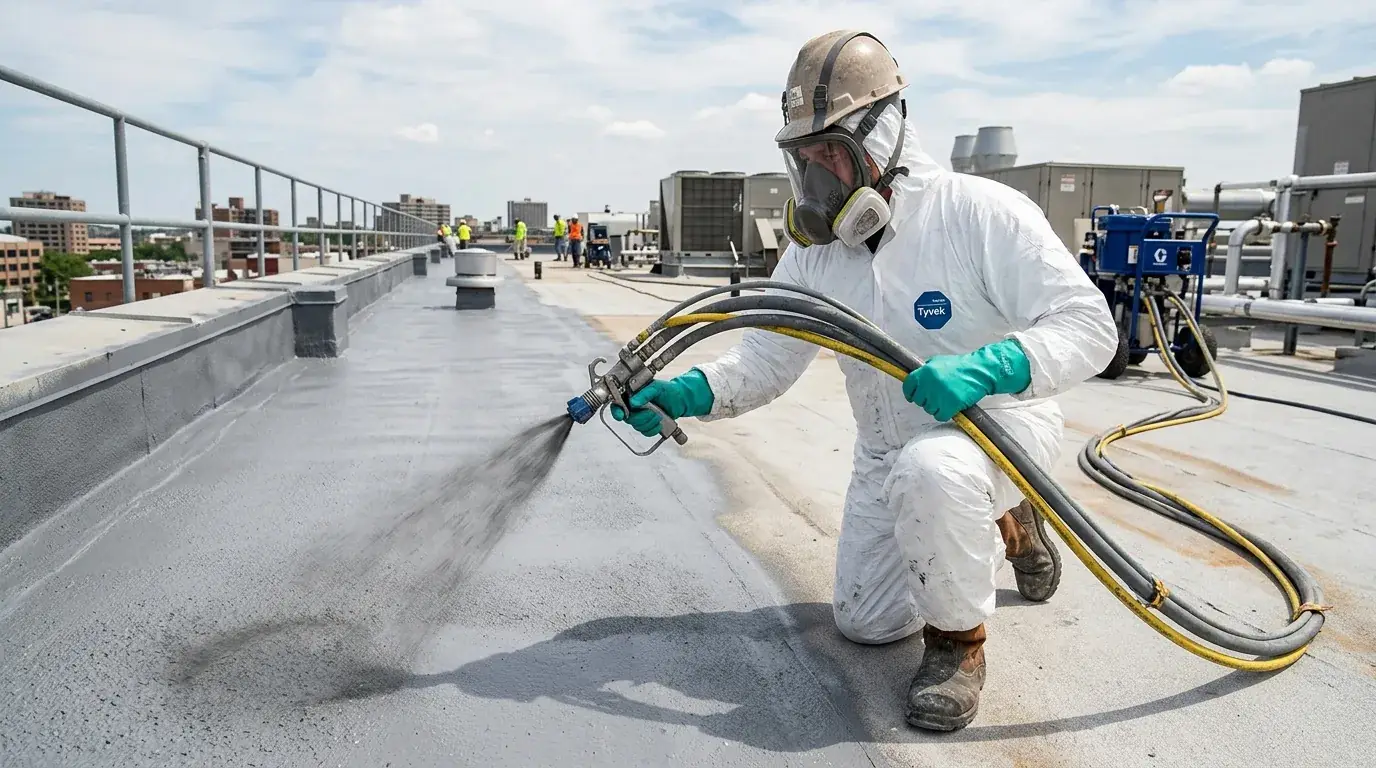
Plural-component spray-applied polyurea: a 100% solids, zero-VOC membrane that gels in seconds and returns a tank, basin or deck to service in hours, not the days a conventional epoxy system needs.
- Elongation at break, up to
- 600%
- Continuous service temperature
- 150 °C
- Return to service from
- 2 hrs
How we approach it
Polyurea is a two-component elastomer, sprayed hot and at pressure so the reaction happens in the gun rather than in the drum. There is no solvent to flash off and no catalyst waiting on ambient humidity, which is what lets it cure in seconds and go down on a damp substrate that would blister a conventional coating.
The same reaction gives it its working range: full elasticity from −50 °C to continuous service at 150 °C, with elongation well beyond what a rigid epoxy film can absorb before it cracks. That suits lining work (a cooling tower basin, a wastewater tank, a manhole shaft) where the substrate itself moves, corrodes or floods.
Every square metre is holiday (spark) tested for pinhole-free coverage and checked for dry film thickness before handover, so what is certified is what was actually applied.
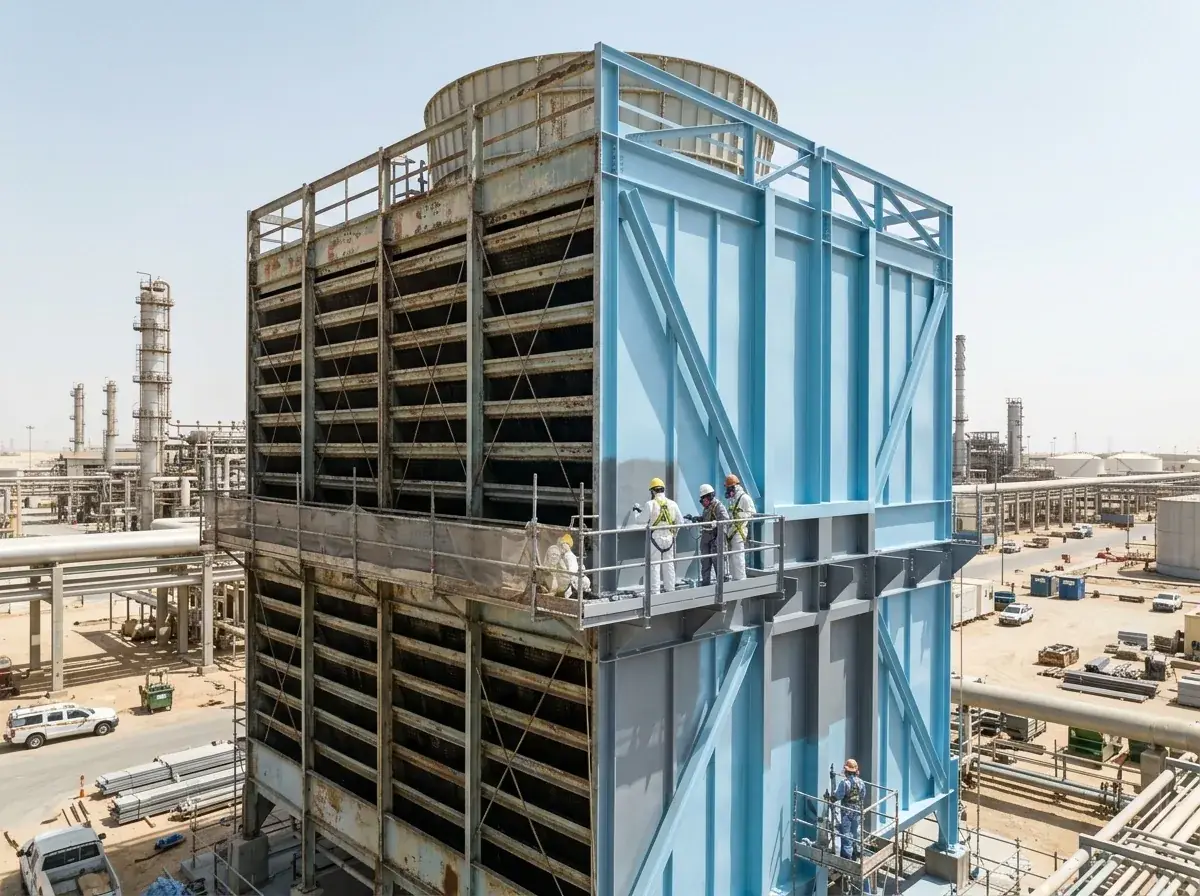
Cooling tower basin relined 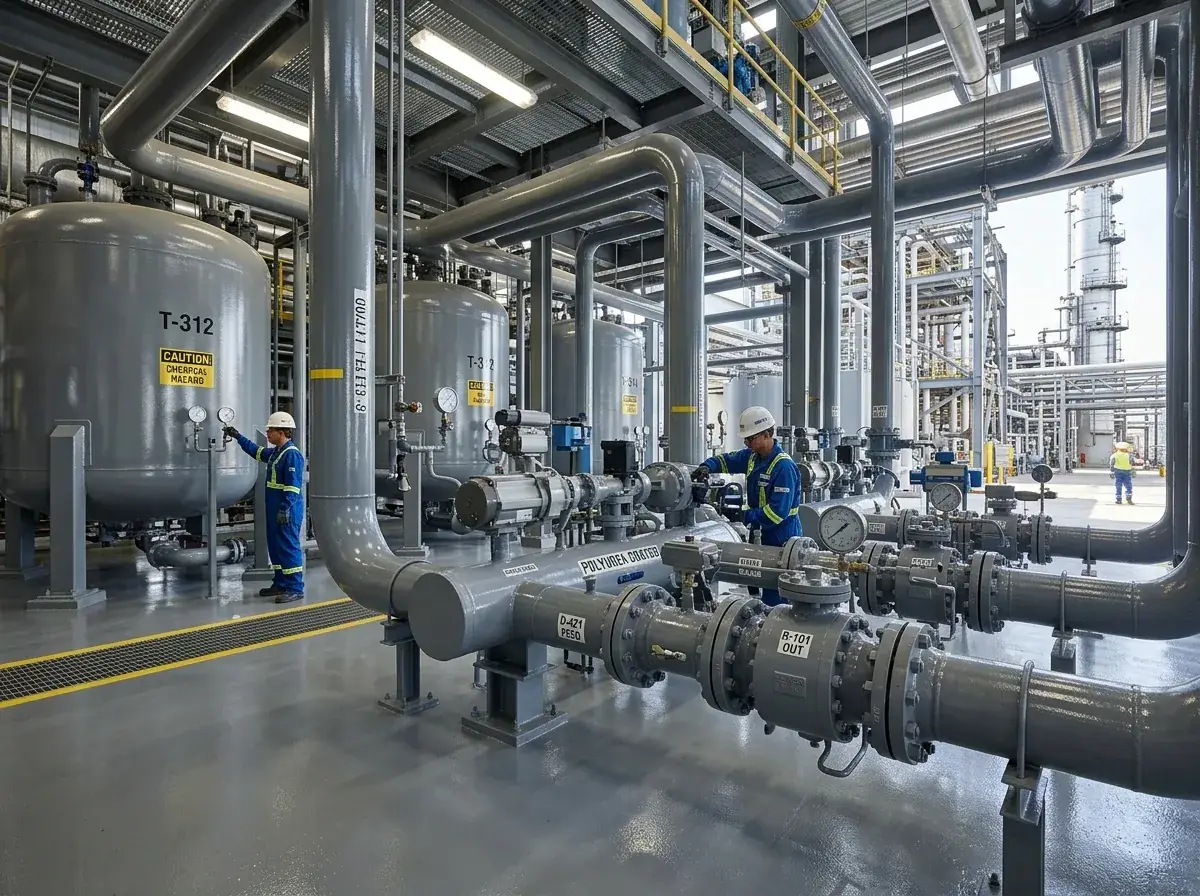
Refinery pipework protected 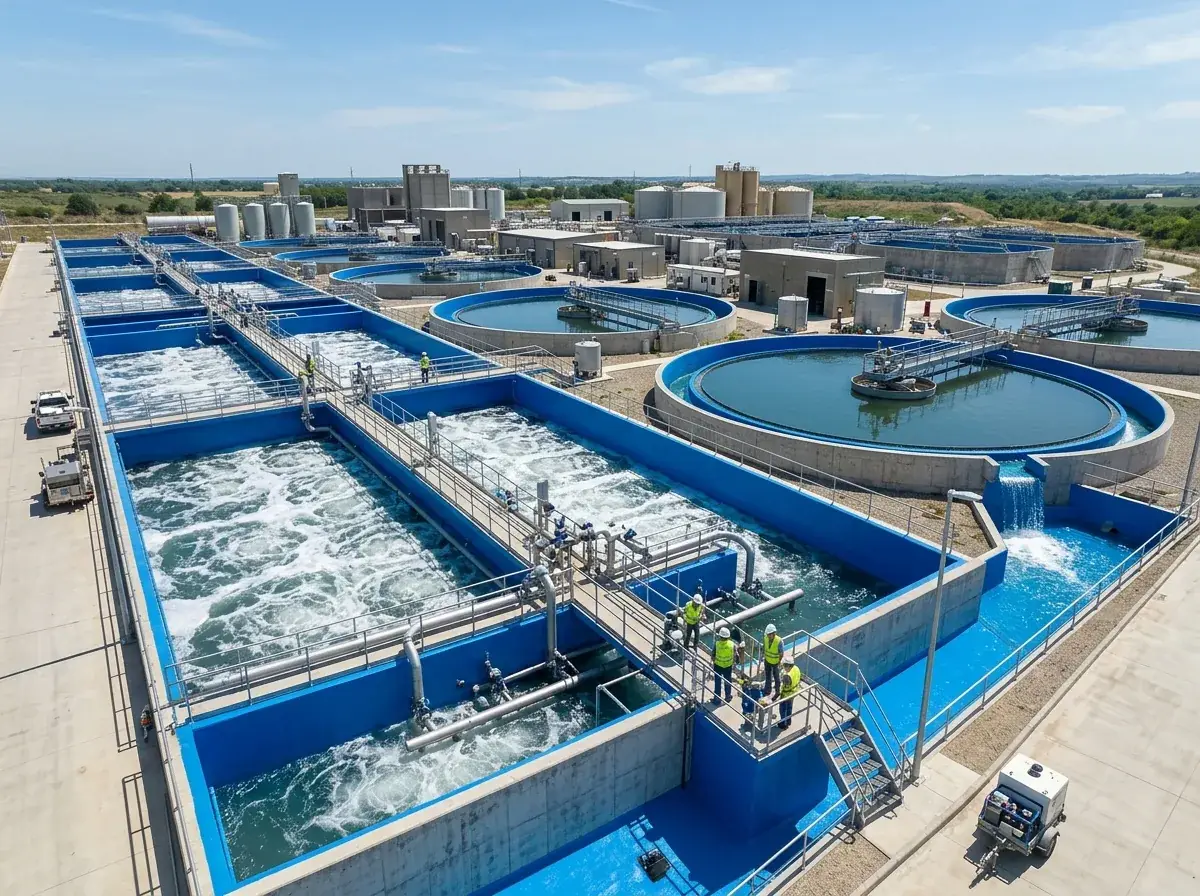
Wastewater tank lined
What we can build to
These ranges cover most of what we make. Duties outside them are reviewed case by case rather than refused on principle.
| Dry film thickness | 1.0 mm to 3.0 mm+ in a single pass |
|---|---|
| Gel time | 3–10 seconds, tack-free in 30–60 seconds |
| Service temperature | −50 °C to +150 °CIntermittent spikes to +160 °C |
| Tensile strength | 15–25+ MPa |
| Elongation at break | 300–600%+ |
| Solids content | 100% solids, zero VOC |
| Substrates | Steel, concrete, cast iron, GRP, sound existing coatings |
Indicative figures. Final specification is confirmed against your duty and a site survey at quotation.
Standards and testing
- Surface preparation to SSPC-SP10 / NACE 2 (steel) and CSP 3–5 (concrete)
- Adhesion verified to ASTM D4541
- Holiday (spark) testing to NACE SP0188
Against conventional epoxy
Indicative comparison. Actual performance depends on the products and application conditions, confirmed against your substrate at quotation.
| Property | Conventional epoxy | Polyurea |
|---|---|---|
| Cure time | 24 hours to several days for a full cure | Gels in 3–10 seconds, walkable in 5–45 minutes |
| Moisture sensitivity | Moisture causes blistering and amine blush | Insensitive during application, sprays onto damp concrete |
| Elongation | Under 5–15%, brittle under thermal strain | 300–600%+, bridges moving cracks |
| Tensile strength | Average, with low puncture absorption | 15–25+ MPa with strong tear resistance |
| Chemical resistance | Good against oils and mild detergents | Resists H2S, acids, caustic gases and hydrocarbons |
| VOC content | Often solvent-carried | 100% solids, zero VOC, suitable for potable water |
| Operating temperature | −20 °C to +110 °C | −50 °C to +150 °C |
| Build per pass | Multiple coats with recoat intervals | Any thickness in one continuous spray |
| Expected service life | Recoats typically every 2–4 years | 15–25+ years |
How the work runs
The same sequence every time, so you know what happens next and what is expected of you at each stage.
Step 1
Substrate survey and moisture profiling
Adhesion pull-off tests, moisture and dew-point checks, and a contamination survey establish the baseline before anything is specified.
Step 2
Mechanical preparation
Abrasive blasting to a defined profile (SSPC-SP10 / NACE 2 for steel, CSP 3–5 for concrete) strips rust, laitance and failed coating back to sound substrate.
Step 3
Priming and vapour barrier
A penetrating primer seals pinholes and porosity where the substrate calls for it, so the polyurea bonds to a sound, sealed surface.
Step 4
Plural-component spray application
Heated proportioning equipment mixes the two components at the gun and builds the specified thickness in one continuous pass, with no cold joints.
Step 5
QA testing and handover
Holiday testing confirms pinhole-free coverage, dry film thickness is verified electromagnetically, and the results are handed over with the job.
Where it is used
- Cooling towers and chillers
- Petrochemical and gas refineries
- Wastewater and potable water
- Sewer and manhole rehabilitation
- Power generation and utilities
- Transport, fleets and heavy machinery
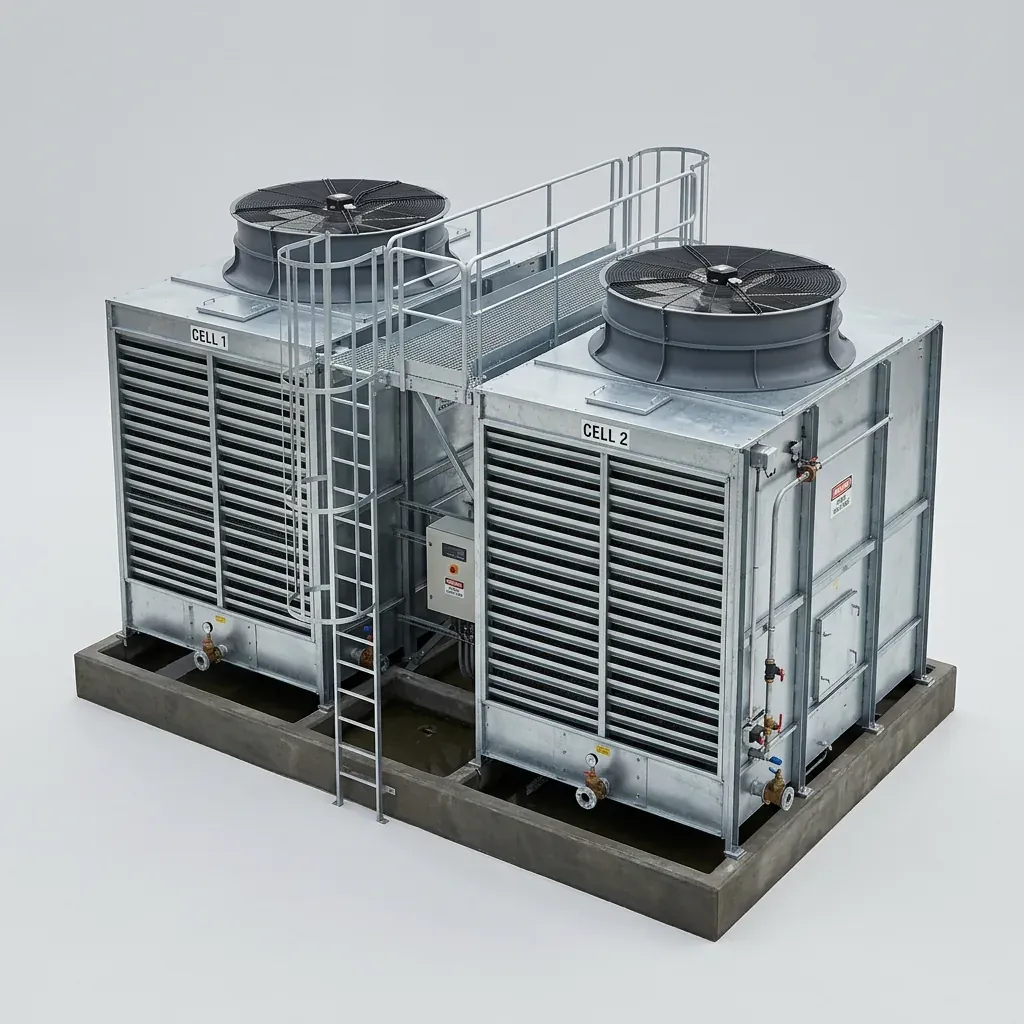
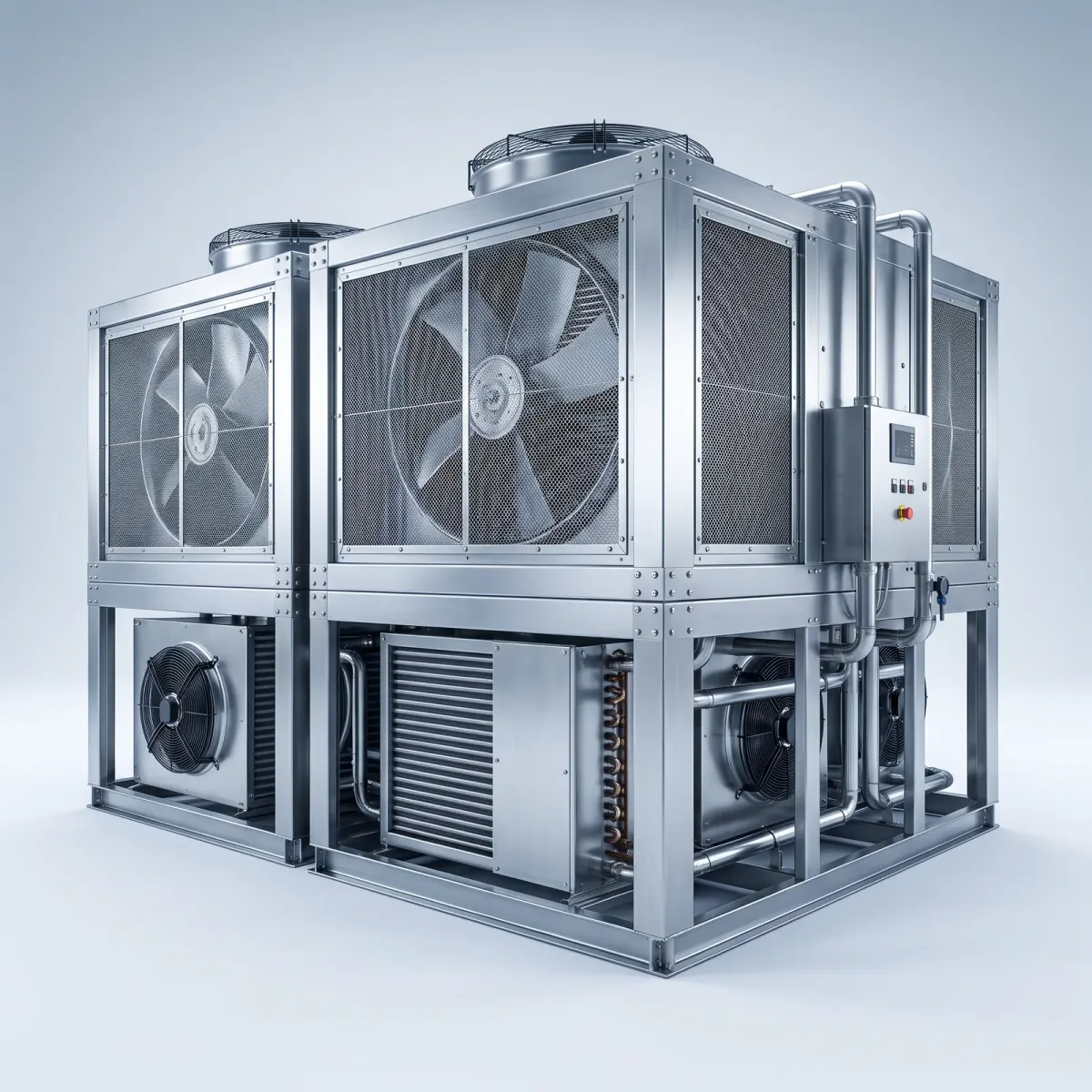
Equipment for this line
Supplied, installed and maintained as part of the same service.
Asked before you ask
Straight answers to the questions we hear most on this service line.
How much material does a job need?
At 100% solids, one litre covers about one square metre at 1.0 mm dry film thickness. The specified thickness depends on the substrate and the service, and is confirmed after the survey.
Can you line a cooling tower basin without a long shutdown?
That is where polyurea earns its place. Once the basin is prepared, the lining gels in seconds and can return to service in hours, so most of the outage is preparation rather than curing.
Is it suitable for potable water tanks?
Zero-VOC, 100% solids systems are used for potable water reservoirs. The specific product is selected for the service and confirmed at quotation.
Other service lines
- Shell & Tube Heat ExchangersThermal design, in-house fabrication, pressure testing and field re-tubing of shell and tube exchangers for process duty.
- Evaporative Condensers & Cooling TowersEvaporative condensers, closed-circuit and open cooling towers sized to the site's real wet bulb, with far lower water use than an open circuit.
- Air-Cooled Condensers & Dry CoolersAir-cooled condensers, evaporators, radiators and dry coolers for sites where water is scarce, expensive, or not worth the treatment burden.
Tell us the load, the site and the timeline.
Send the duty, the site and anything written on the nameplate. An engineer replies with questions first, then a costed proposal.
Plant down right now? Call the breakdown line on +966 53 783 7389, any hour.