
Design, fabrication and re-tubing
Shell & Tube Heat Exchangers
Thermal design, fabrication and field re-tubing of shell and tube exchangers for process duty, sized against your real operating conditions rather than a catalogue selection.
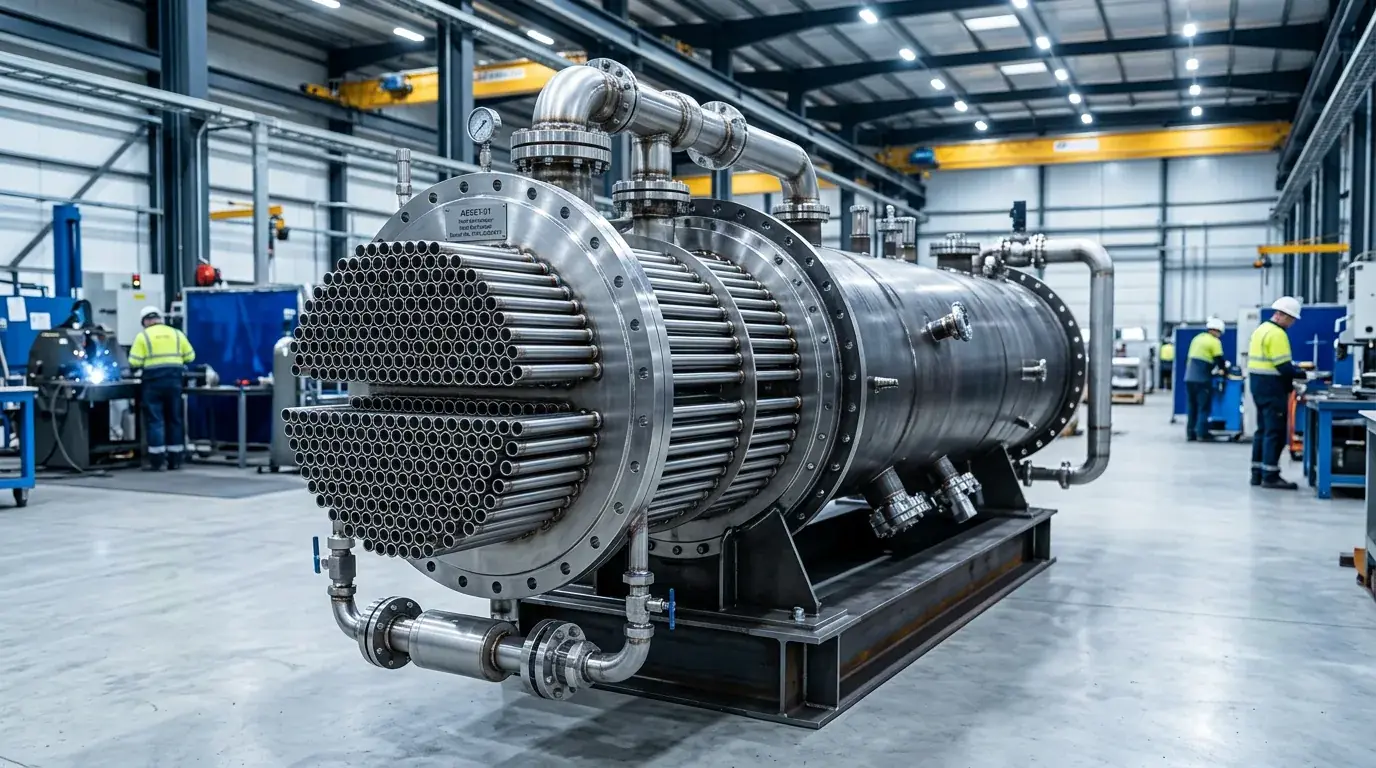
- Design pressure, shell and tube side
- 40 bar
- Tube length
- 6,000 mm
- Shell diameter
- 1,500 mm
How we approach it
A shell and tube exchanger is only as good as the thermal design behind it. We start from the duty (flow rates, inlet and outlet temperatures, allowable pressure drop, fouling factors) and size the bundle around it, rather than fitting the nearest standard unit and hoping the margin covers the difference.
Fabrication happens in-house, which is what makes re-tubing viable as a service rather than a replacement sale. Where a shell is sound and only the bundle has failed, re-tubing typically returns the unit to full duty at a fraction of the cost of new plant, and in a fraction of the lead time.
Every unit is hydrostatically tested before it leaves, and we witness-test on request.
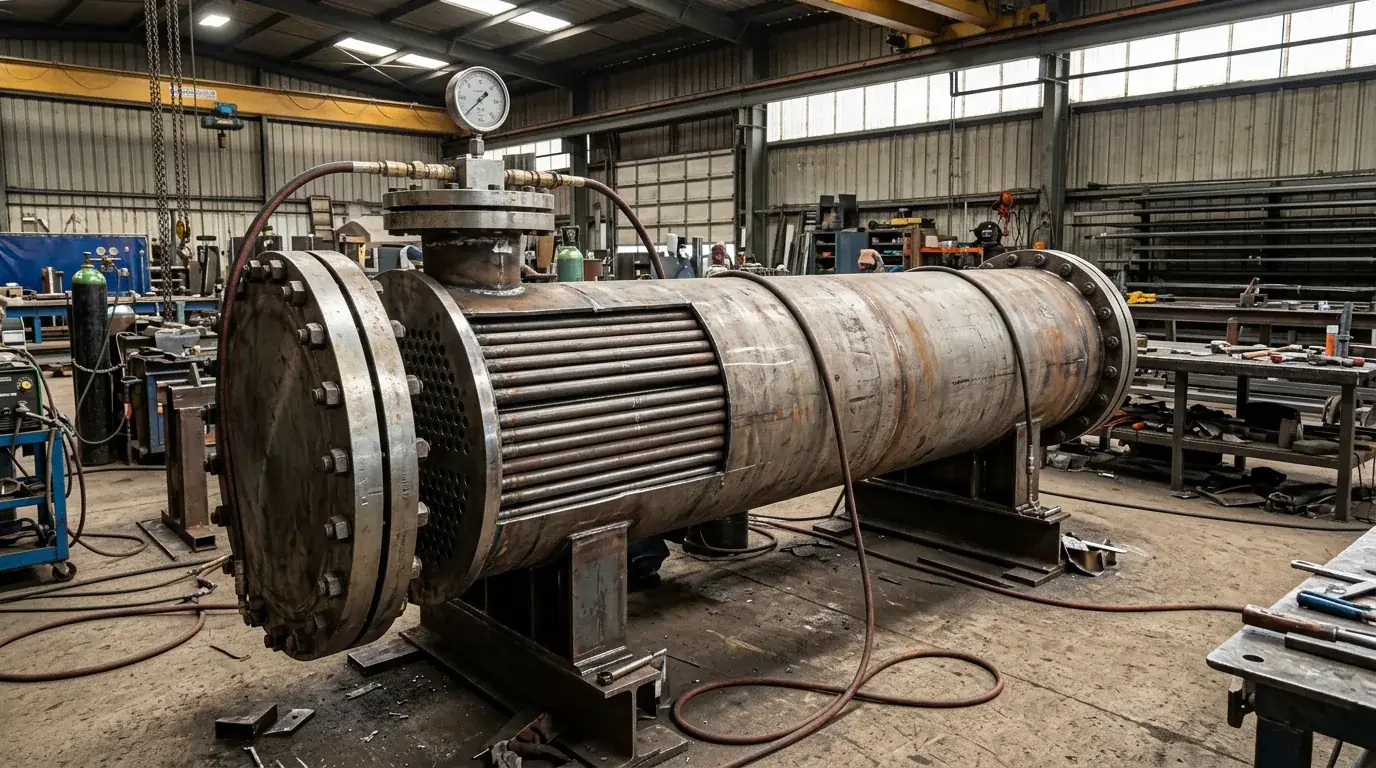
Shell assembled and headed up 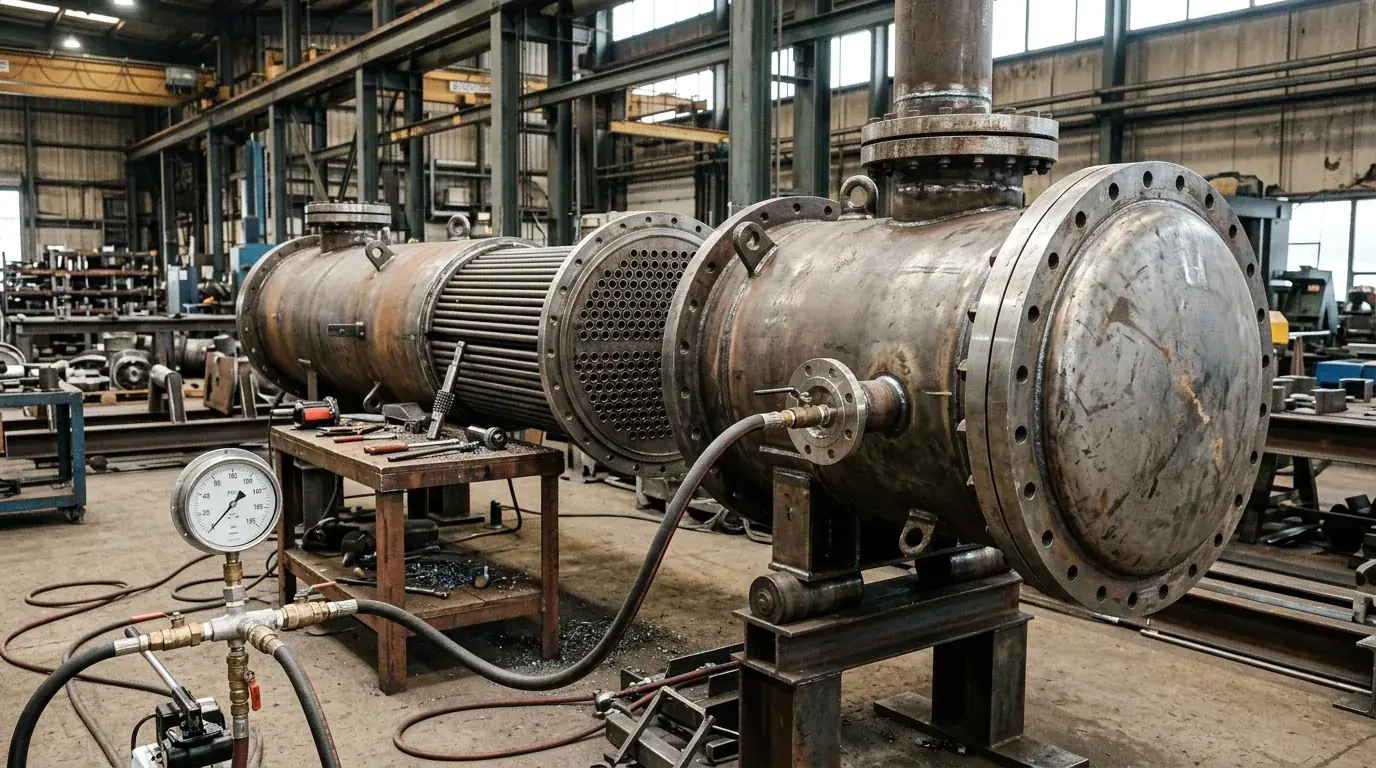
Hydrostatic test before despatch 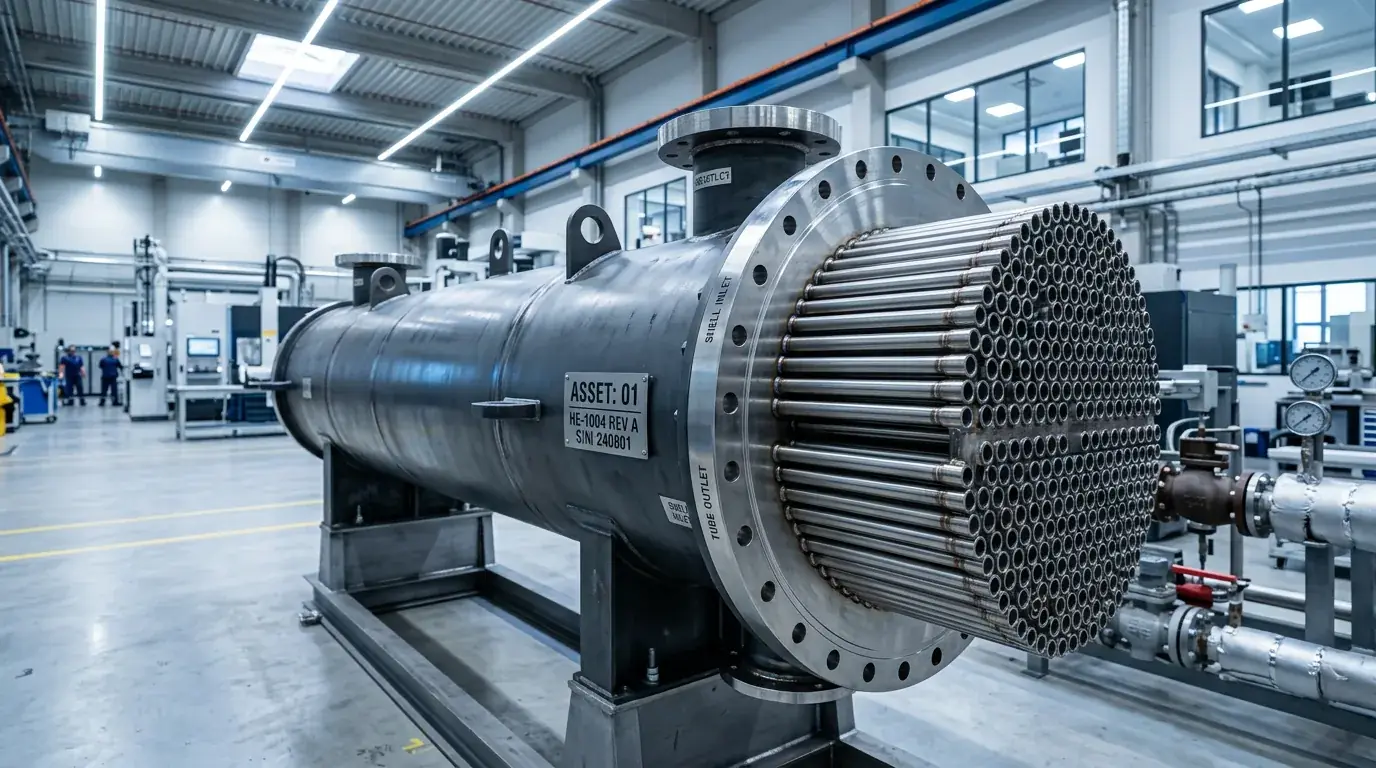
Tube bundle and tubesheet
What we can build to
These ranges cover most of what we make. Duties outside them are reviewed case by case rather than refused on principle.
| Shell diameter | 150–1,500 mm |
|---|---|
| Tube length | Up to 6,000 mm |
| Design pressure | Up to 40 bar, shell and tube side |
| Design temperature | −20 °C to 400 °CHigher duties reviewed case by case |
| Tube materials | Carbon steel, stainless 304/316L, copper, cupro-nickel 90/10, titanium |
| Configurations | Fixed tubesheet, U-tube, floating head |
| Testing | Hydrostatic at 1.5 × design pressure |
Indicative figures. Final specification is confirmed against your duty and a site survey at quotation.
Standards and testing
- TEMA Class R, C and B
- ASME Section VIII Division 1 design principles
- EN 13445 and API 660 on request
- Hydrostatic testing to 1.5 × design pressure
How the work runs
The same sequence every time, so you know what happens next and what is expected of you at each stage.
Step 1
Thermal design and sizing
Duty, flow rates, temperatures, allowable pressure drop and fouling factors are worked through before any drawing is produced. You get the calculation, not just the result.
Step 2
Drawing and approval
General arrangement and nozzle orientation drawings are issued for your approval. Nothing is cut until the drawing is signed off.
Step 3
Fabrication
Shell, tubesheets, baffles and bundle are fabricated in-house. Tube-to-tubesheet joints are expanded, and seal-welded where the duty calls for it.
Step 4
Testing and inspection
Hydrostatic test at 1.5 × design pressure, with dimensional and weld inspection recorded. Third-party witness available on request.
Step 5
Delivery and installation
Delivered to site and, where the scope includes it, set, piped and commissioned by our own installation team.
Where it is used
- Process heating and cooling
- Steam condensing
- Oil coolers
- Chilled and condenser water circuits
- Petrochemical process duty
- Food and beverage processing
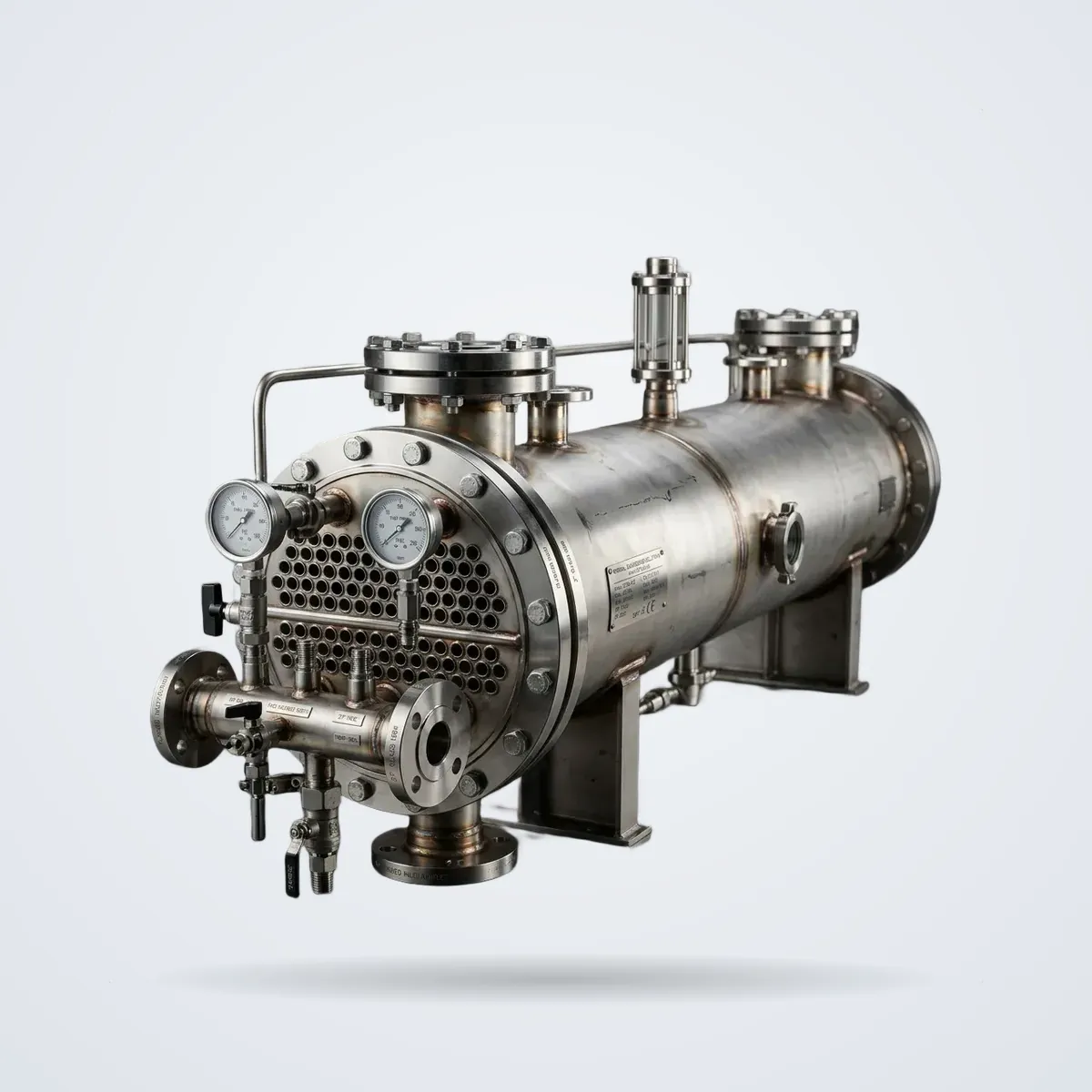
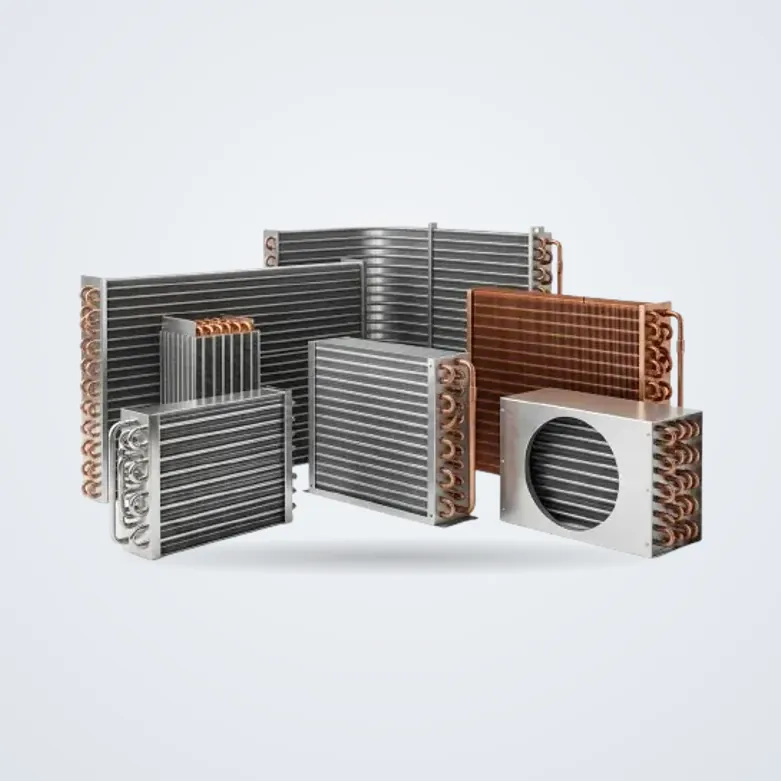
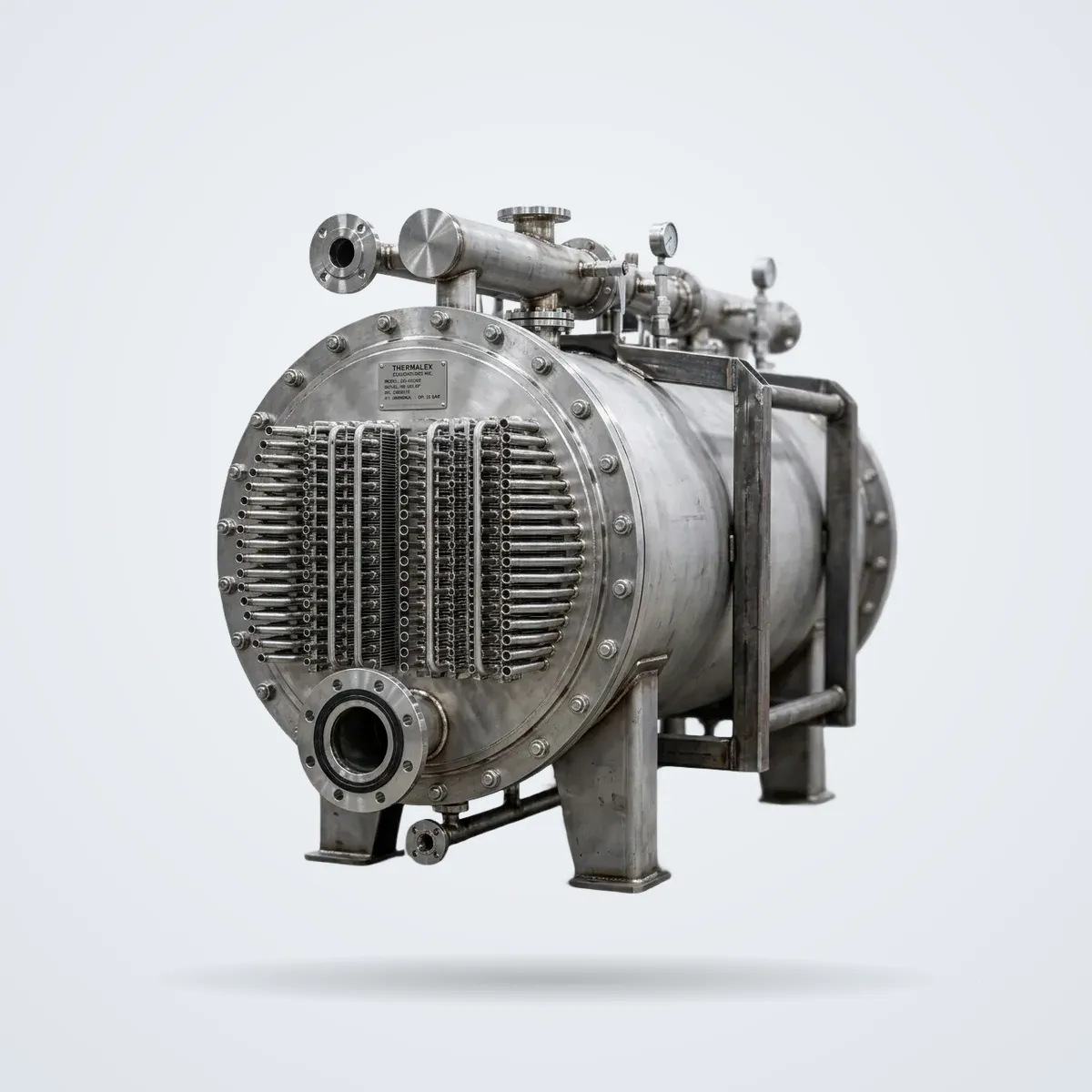
Equipment for this line
Supplied, installed and maintained as part of the same service.
Asked before you ask
Straight answers to the questions we hear most on this service line.
Can you re-tube an exchanger you did not build?
Yes. Most re-tubing work is on other manufacturers' units. We measure the existing tubesheet and baffle arrangement on site and match the new bundle to it. If the shell has thinned beyond repair, we tell you before quoting a bundle.
Is re-tubing worth it, or should we replace the unit?
It depends on the condition of the shell and tubesheets. Where those are sound, re-tubing is substantially cheaper and quicker than new plant. Where the shell has corroded, replacement is the honest answer and we will say so.
What do you need from us to quote?
For a new unit: flow rates on both sides, inlet and outlet temperatures, design pressure and the fluids involved. For a re-tube: the make and model if known, plus tube count, diameter and length.
How long does fabrication take?
It depends on size, material availability and current workload. We give a firm date with the quotation rather than a nominal one, and would rather quote a longer date and hold it.
Other service lines
- Evaporative Condensers & Cooling TowersEvaporative condensers, closed-circuit and open cooling towers sized to the site's real wet bulb, with far lower water use than an open circuit.
- Air-Cooled Condensers & Dry CoolersAir-cooled condensers, evaporators, radiators and dry coolers for sites where water is scarce, expensive, or not worth the treatment burden.
- HVAC & MEPMechanical, electrical and plumbing engineering for commercial and industrial facilities, from load calculation to a documented handover.
Tell us the load, the site and the timeline.
Send the duty, the site and anything written on the nameplate. An engineer replies with questions first, then a costed proposal.
Plant down right now? Call the breakdown line on +966 53 783 7389, any hour.