
Evaporators, radiators and dry coolers
Air-Cooled Condensers & Dry Coolers
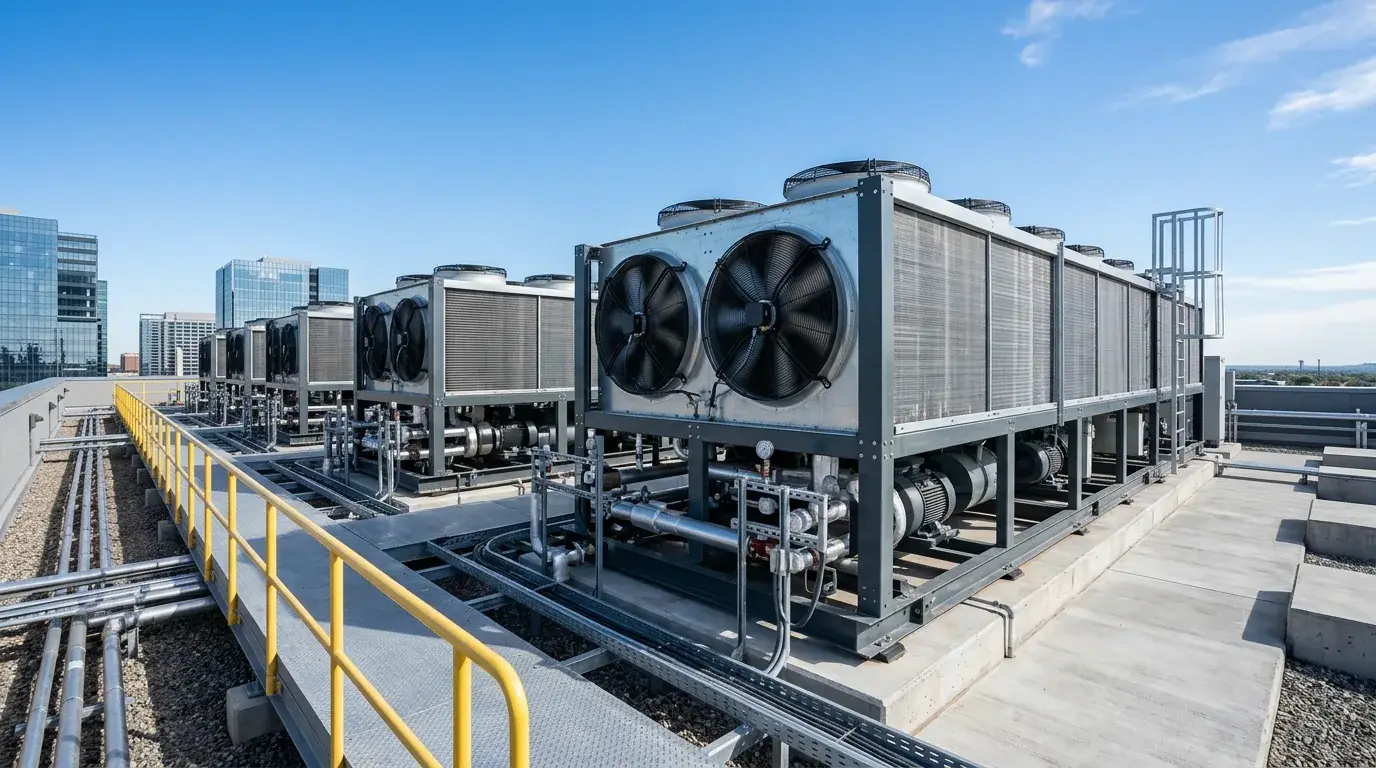
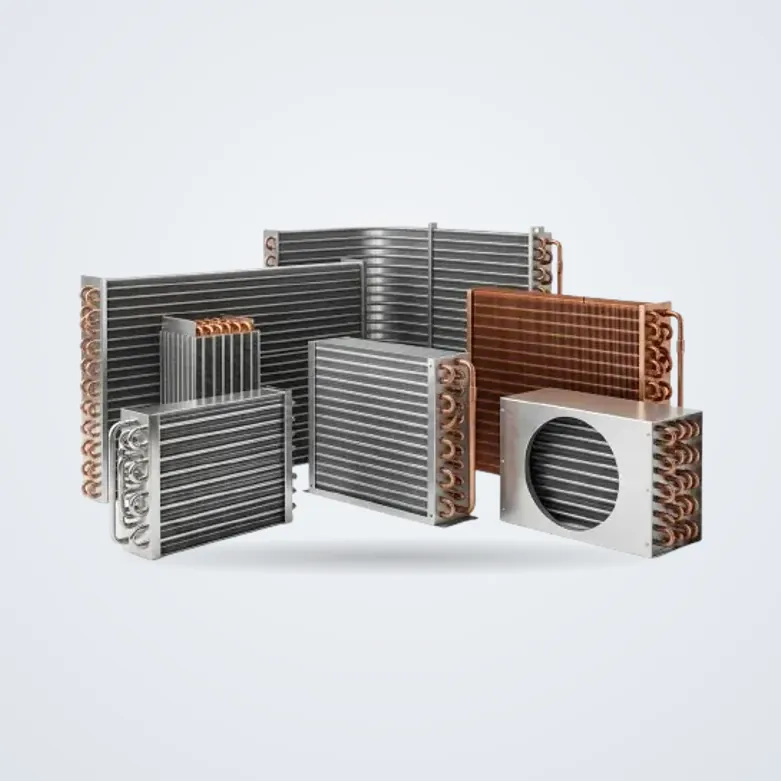
Air-cooled condensers, evaporators, radiators and dry coolers for sites where water is scarce, expensive, or simply not worth the treatment burden.
- Water consumption
- Zero
- Design ambient, up to
- 55 °C
- Coil depth, up to
- 8 rows
How we approach it
Air-cooled heat rejection trades a larger footprint and higher fan energy for the elimination of water entirely: no make-up, no treatment, no blowdown, no legionella management. On many Saudi sites that trade is worth making.
The design question is always the approach to ambient. A unit sized against an optimistic peak temperature fails on exactly the days it matters, so we select against the real design ambient for the site and state the resulting condensing temperature explicitly.
Coils are built to the duty, with fin spacing chosen for the dust and sand loading of the location. A tight fin pitch that blocks in six months is a false economy.
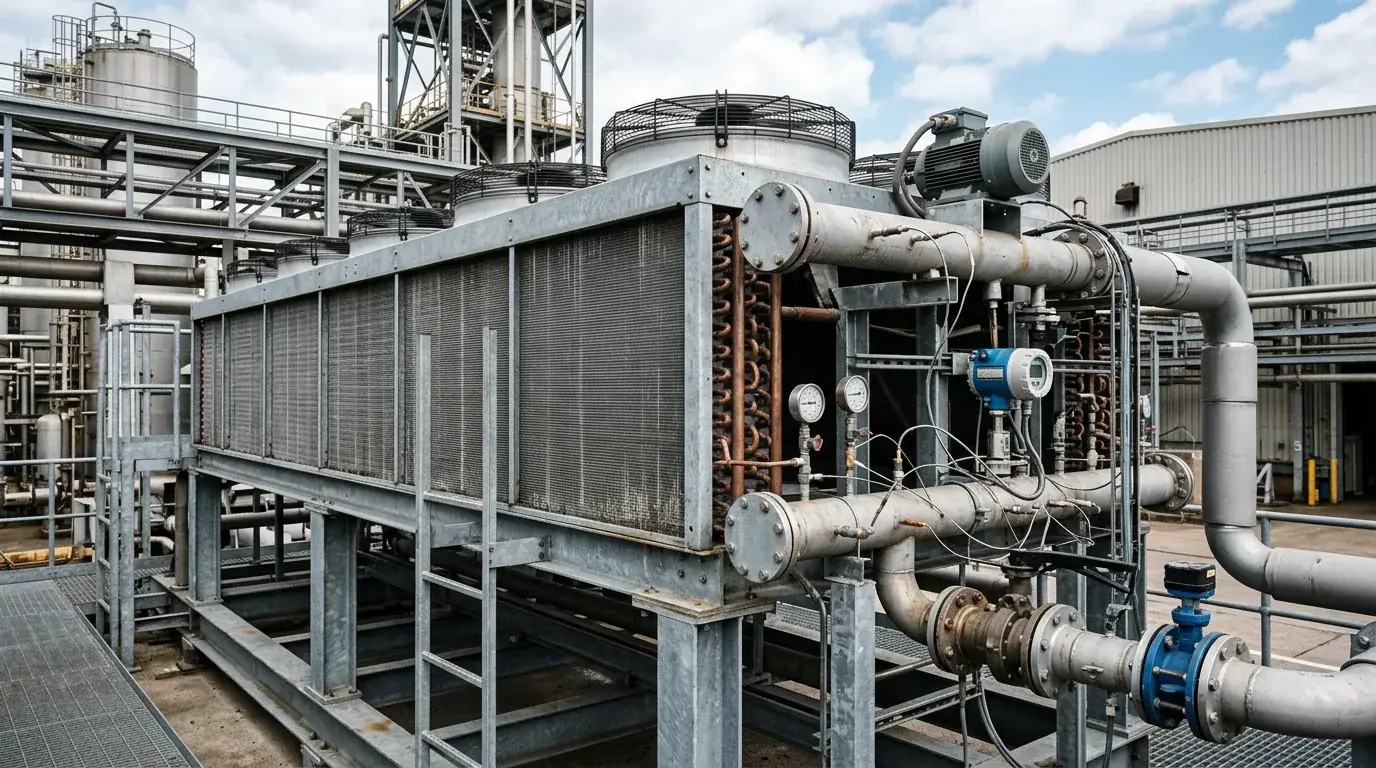
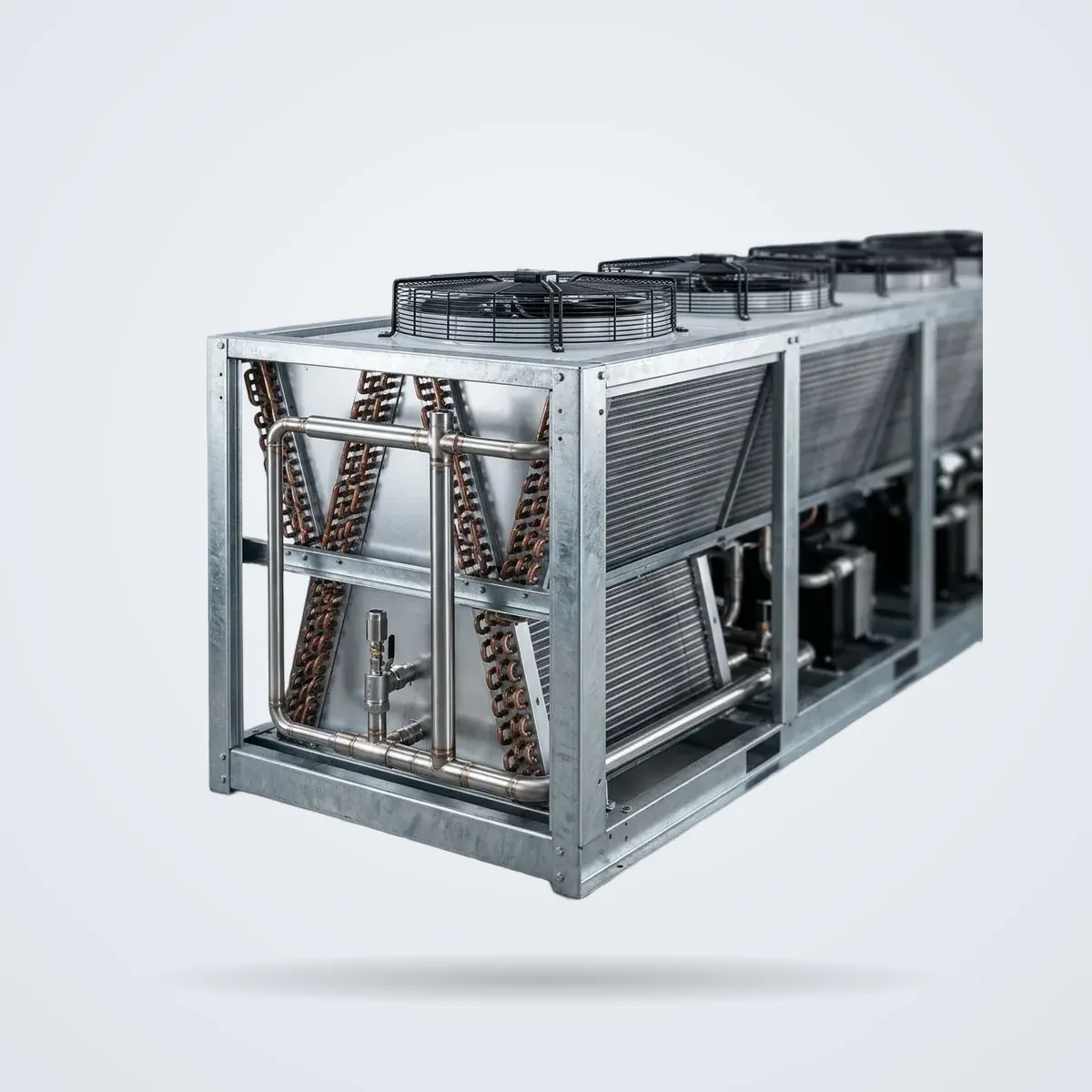
Inlet headers and isolation 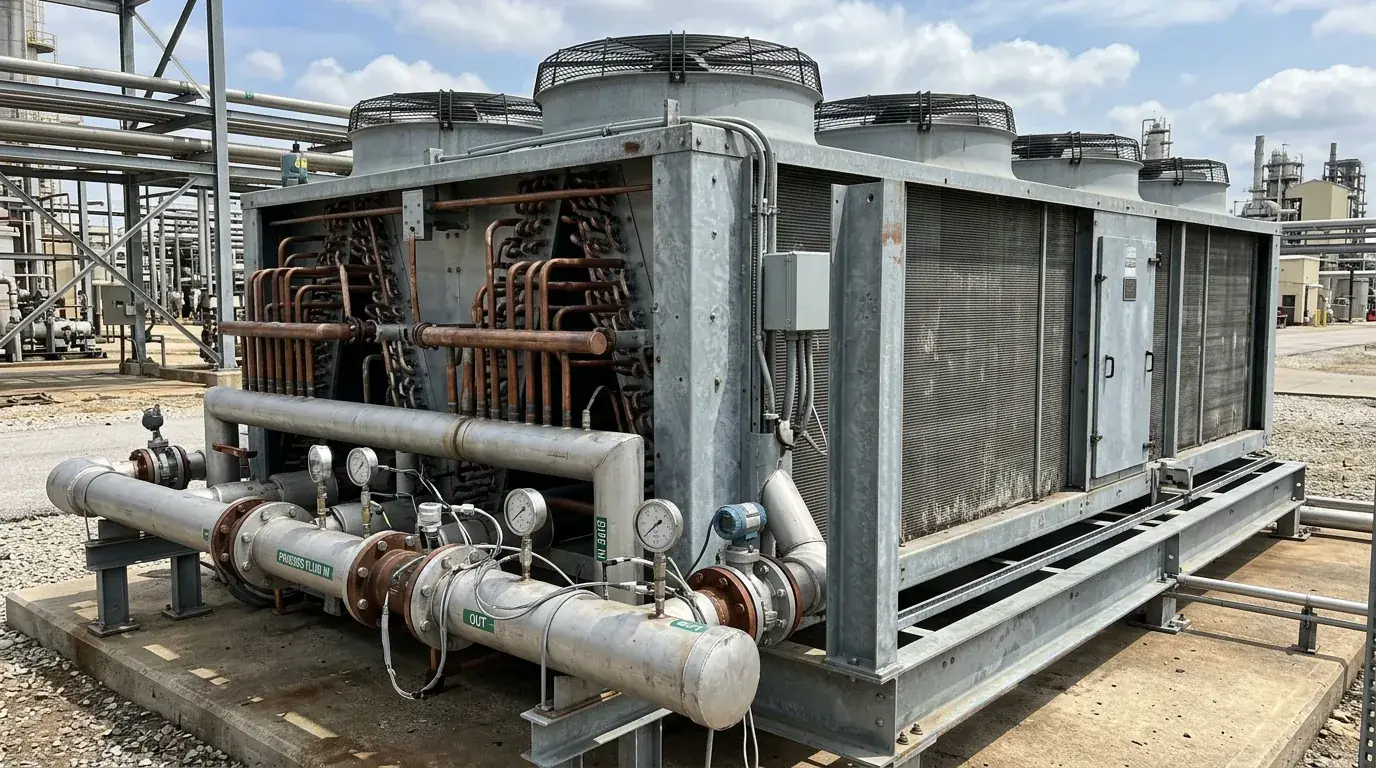
Casing off, coil exposed 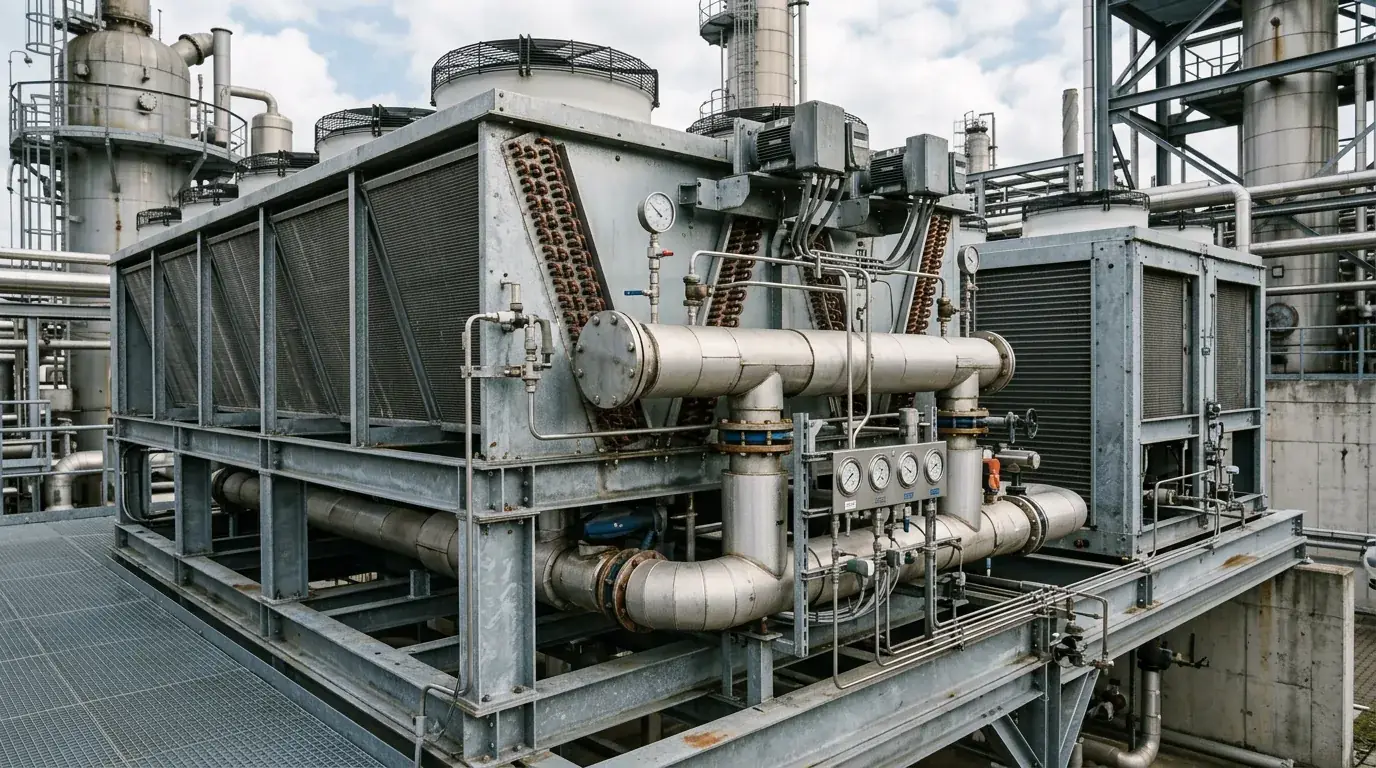
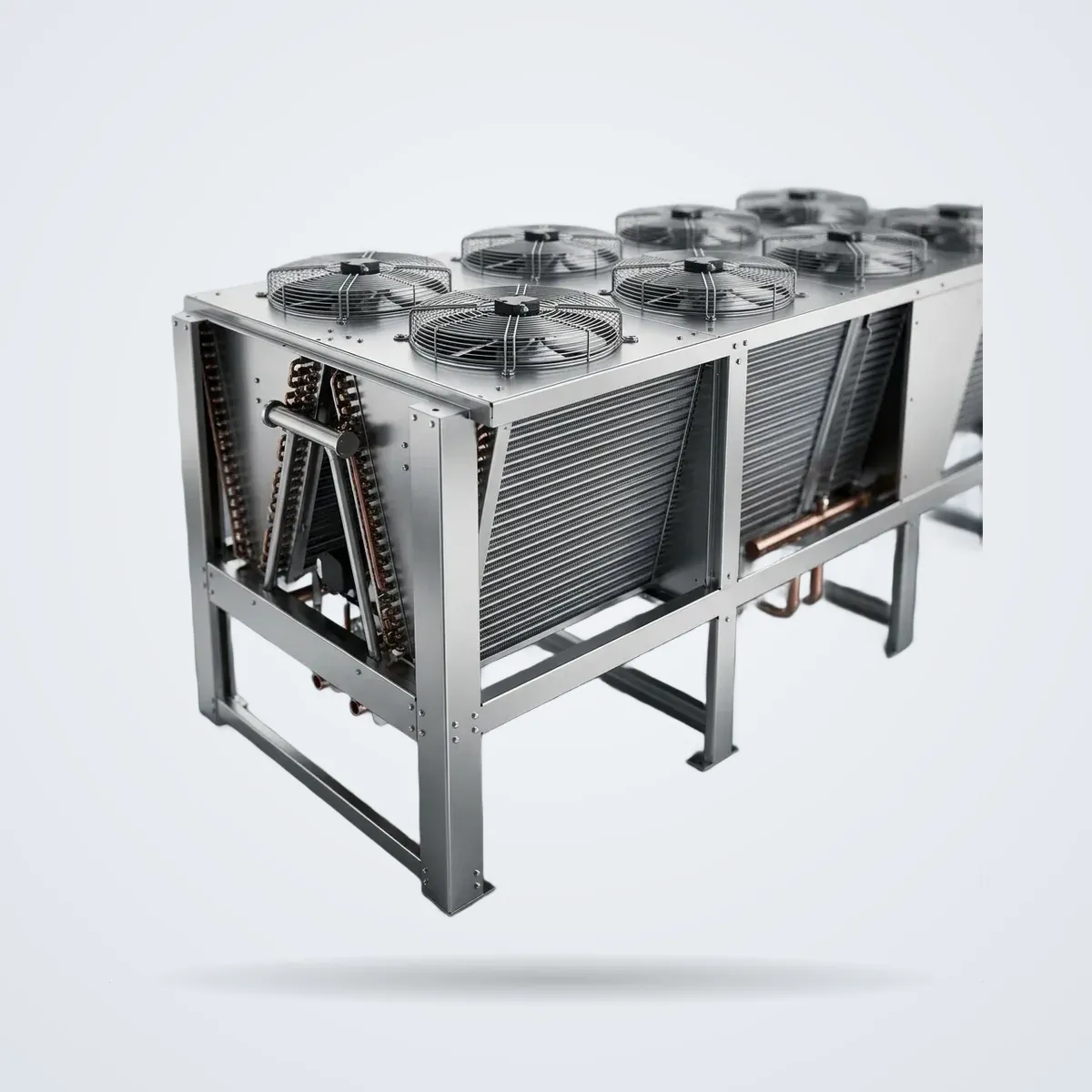
Installed alongside the plant
What we can build to
These ranges cover most of what we make. Duties outside them are reviewed case by case rather than refused on principle.
| Coil construction | Copper tube, aluminium fin |
|---|---|
| Fin spacing | 2.1–3.2 mmWider pitch for dusty or sandy sites |
| Coil rows | 1–8 |
| Fin coating | Bare aluminium, epoxy or hydrophilic |
| Fans | Axial, direct drive, optional EC motors and speed control |
| Design ambient | Selected to site, up to 55 °C |
| Casing | Galvanised steel, powder coated |
Indicative figures. Final specification is confirmed against your duty and a site survey at quotation.
Standards and testing
- Coils pressure tested before dispatch
- Fan motors to IP55 as standard
- Powder coating to the site's corrosion category
How the work runs
The same sequence every time, so you know what happens next and what is expected of you at each stage.
Step 1
Duty and ambient selection
Heat rejection load and the design ambient for the actual site. We state the resulting condensing temperature rather than leaving it implied.
Step 2
Coil and fan configuration
Rows, fin pitch and fan arrangement chosen against the site's dust loading, noise limits and available space.
Step 3
Fabrication and supply
Coil built, casing fabricated, fans fitted and the assembly leak-tested before dispatch.
Step 4
Site installation
Set, piped and wired, with airflow clearances verified so discharge air is not drawn back into the intake.
Step 5
Performance verification
Condensing temperature and air-on/air-off temperatures measured against the design figures and recorded.
Where it is used
- Refrigeration condensing
- Process dry cooling
- Engine and generator radiators
- Remote sites with no water supply
- Chiller condenser replacement
- Compressed air aftercooling
Equipment for this line
Supplied, installed and maintained as part of the same service.
Air-Cooled Equipment
Air-Cooled Condenser
5 kW to 10,000 kW+ with zero water consumption
Air-Cooled Equipment
Dry Cooler
10 kW to 3,000 kW+ closed loop with no water use
Air-Cooled Equipment
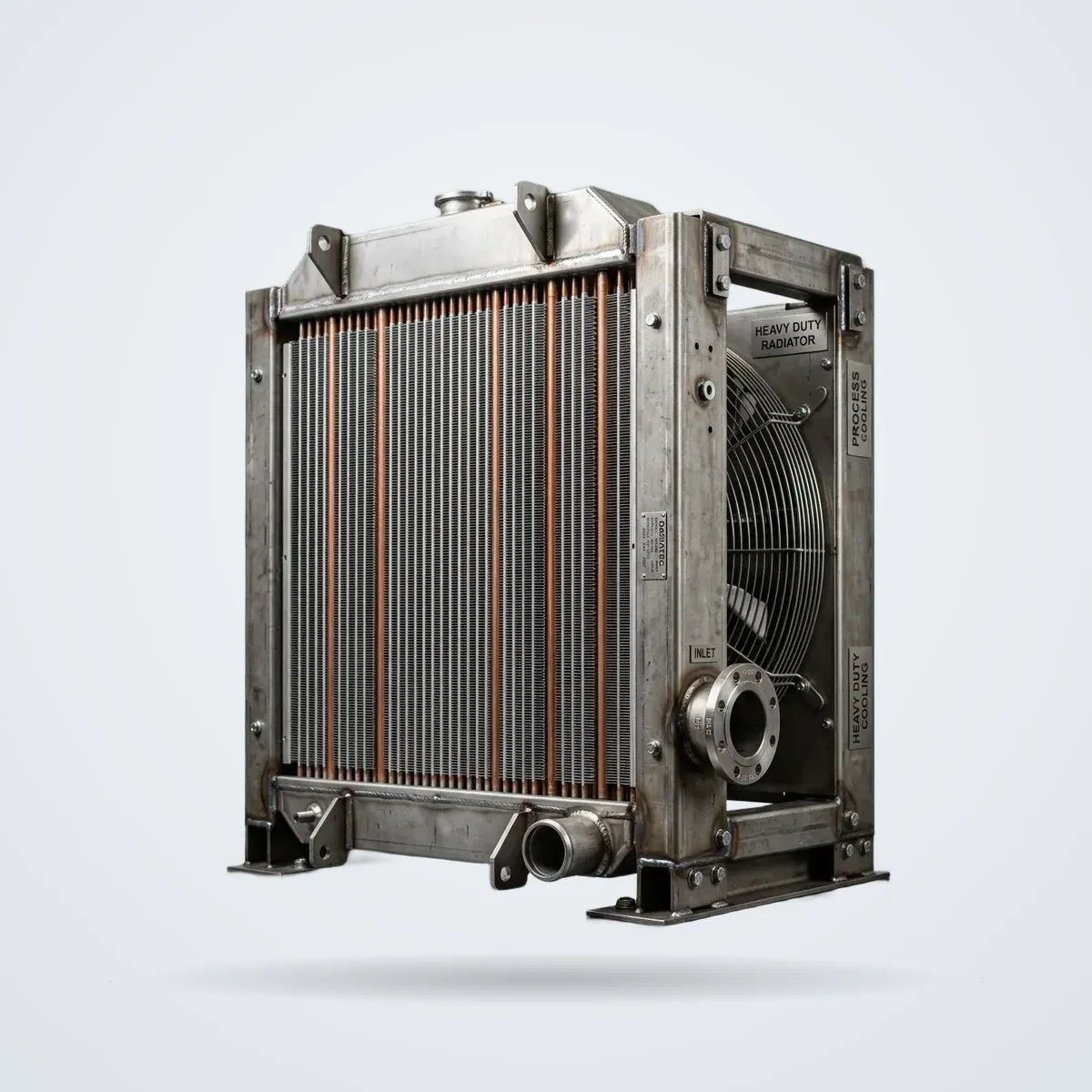
Industrial Radiator
10 kW to 1,000 kW+ per unit for engine and process cooling
Heat Exchangers
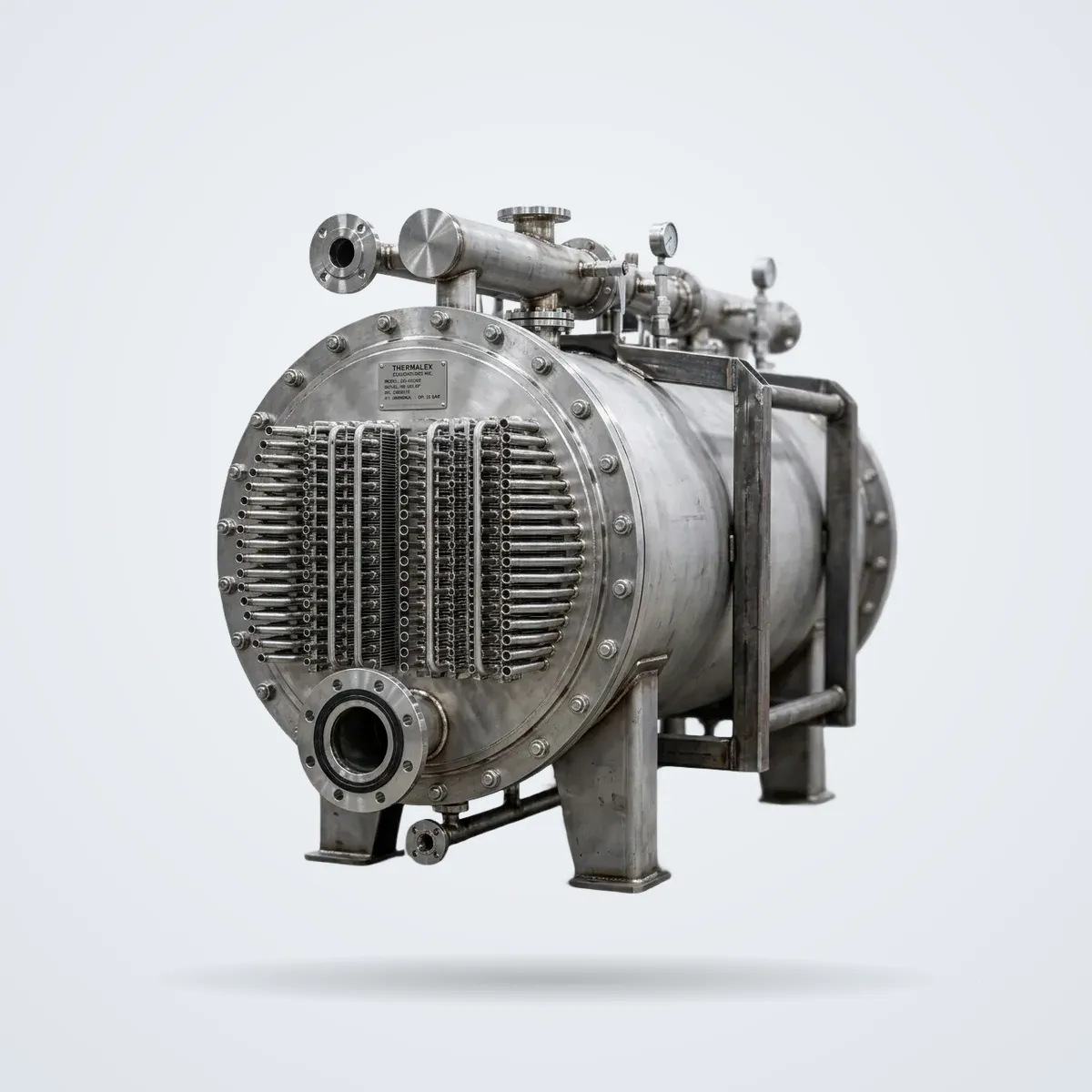
Industrial Evaporators & Unit Coolers
1 kW to 2,000 kW+ cooling on chilled water, brine or DX
Heat Exchangers
Condenser & Cooling Coils
New coils, or replacements built to the existing face size
Asked before you ask
Straight answers to the questions we hear most on this service line.
Air-cooled or water-cooled?
Water-cooled is more efficient per kW rejected. Air-cooled removes water cost, treatment and legionella risk entirely. Where water is expensive or unavailable, air-cooled usually wins on total cost even though it loses on efficiency. If it is close, we run both cases.
How do you handle sand and dust?
Mainly through fin pitch. A wider pitch rejects slightly less heat per square metre but stays clean far longer and can be washed down. We would rather supply a slightly larger coil that still works in year three.
Can you replace just the coil in an existing unit?
Usually, yes. We measure the existing coil and build a replacement to the same face dimensions and connection positions, which avoids disturbing the casing and pipework.
Other service lines
- Shell & Tube Heat ExchangersThermal design, in-house fabrication, pressure testing and field re-tubing of shell and tube exchangers for process duty.
- Evaporative Condensers & Cooling TowersEvaporative condensers, closed-circuit and open cooling towers sized to the site's real wet bulb, with far lower water use than an open circuit.
- HVAC & MEPMechanical, electrical and plumbing engineering for commercial and industrial facilities, from load calculation to a documented handover.
Tell us the load, the site and the timeline.
Send the duty, the site and anything written on the nameplate. An engineer replies with questions first, then a costed proposal.
Plant down right now? Call the breakdown line on +966 53 783 7389, any hour.